Token pages that made trust visible.
Users couldn’t reliably verify token legitimacy or compare market signals on the Oasis block explorer, and declining network activity followed. Turn token discovery into a confident, informed decision.
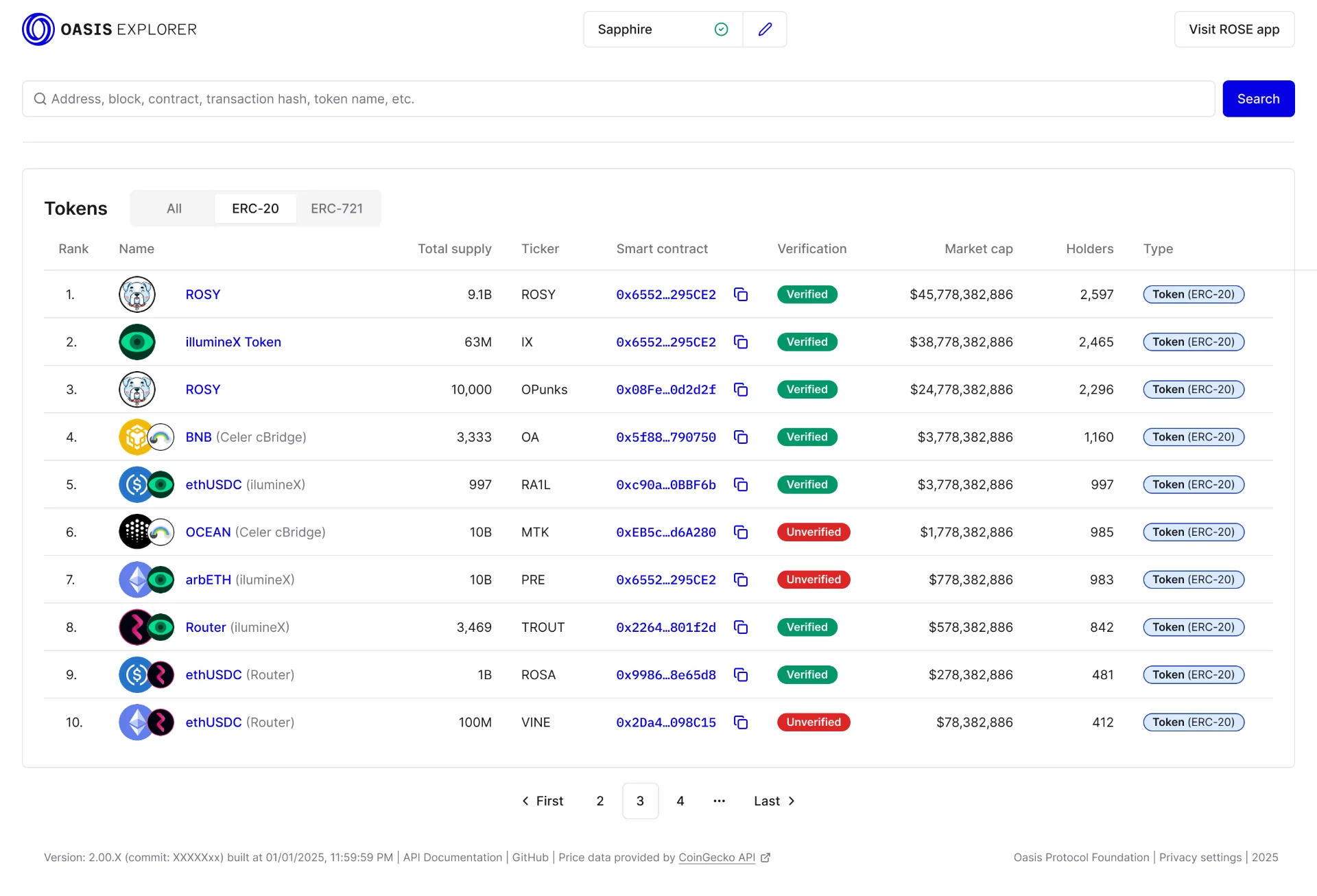
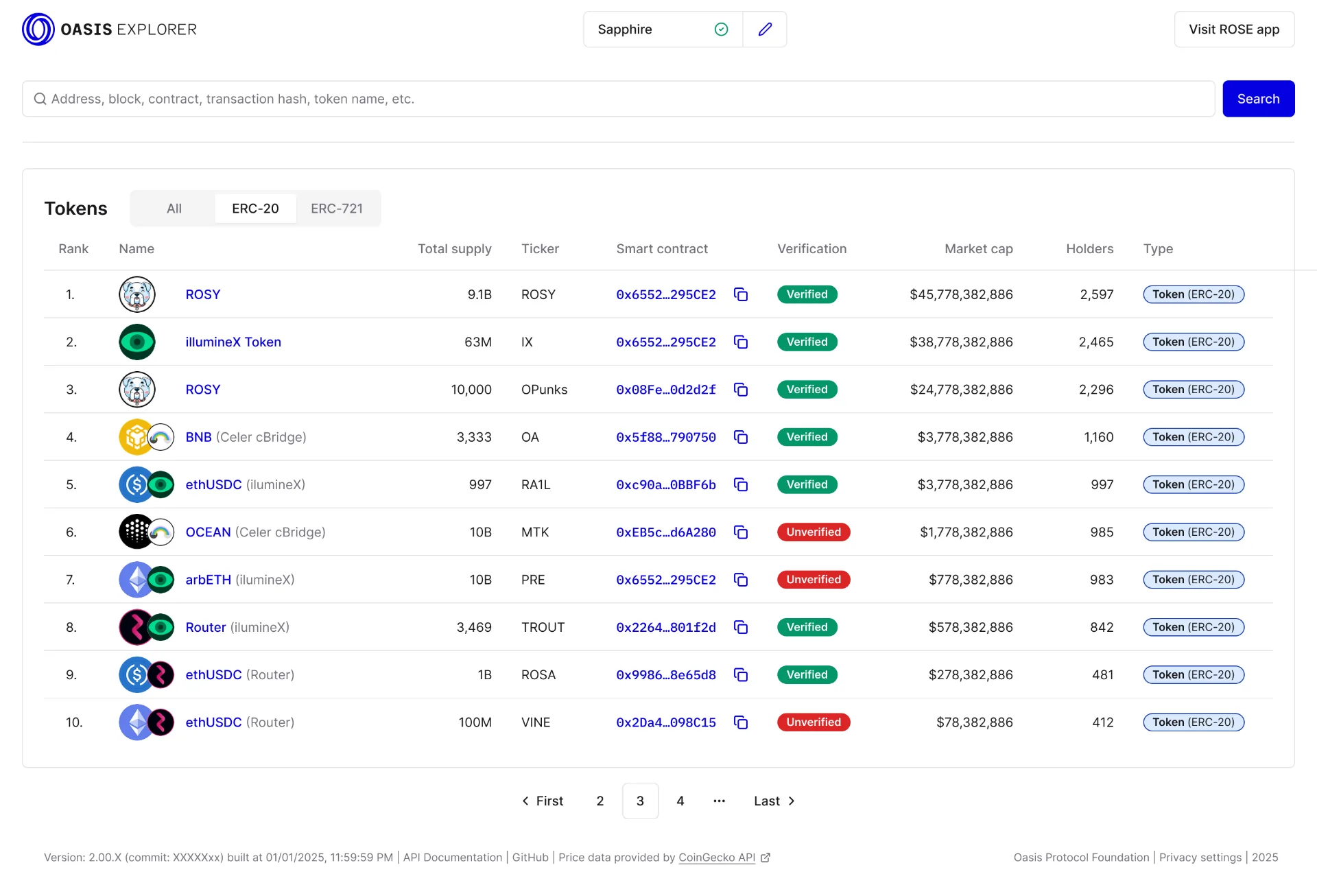
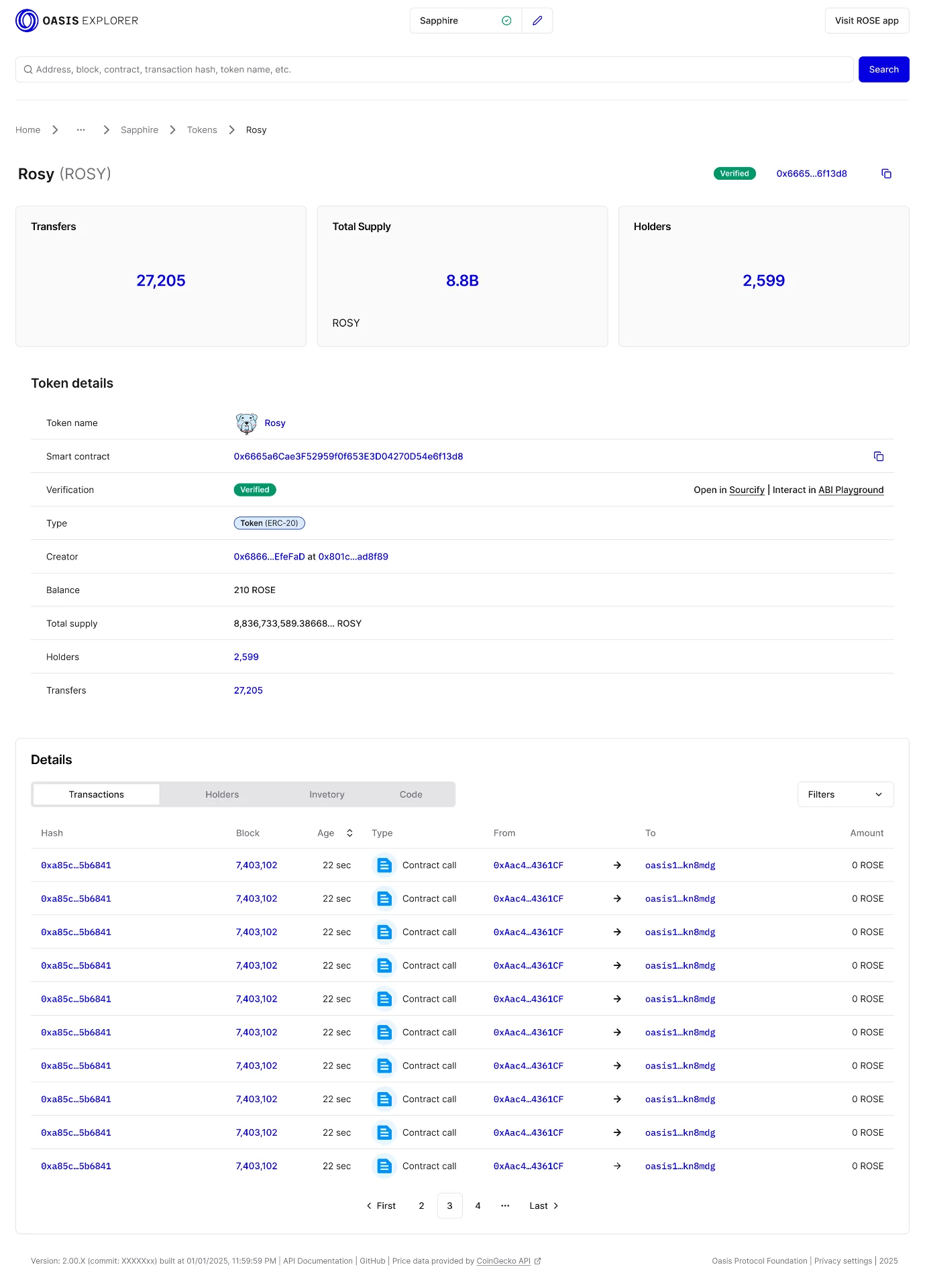
Users assumed the worst about any token they couldn’t verify. We gave the explorer a single source of truth.
Interviews with casual users and power traders, backed by a survey, surfaced a crisis of confidence: with no way to verify a token instantly, people assumed the worst, and that fear was driving network activity down. Etherscan, Polygonscan and Solscan shared the same gaps: weak discoverability and minimal trust signals.
The answer was progressive disclosure. A token list leads with high-signal trust markers (verification badges, market cap, holder count), and detail pages add external project links, independent verification through Sourcify and direct contract source access, so casual users stay oriented and power users still get the depth they expect.
- Competitive research Etherscan, Polygonscan, Solscan
- User interviews and survey casual users and power traders
- Token list filtering, sorting and trust markers
- Token detail pages progressive disclosure, Sourcify
- Contract transparency source code and project links
- Exchange handoff from discovery to liquidity
What we achieved
Figures reported by the client after launch.Total token value held per address in the first month after launch.
A sign of stronger ecosystem liquidity and broader adoption.
From the first interviews to the finished token experience.
A high-bounce explorer became a trusted entry point.
Clarity builds confidence. Confidence fuels participation.
Surfacing high-signal insights at the moment of decision reversed declining network activity, turning a high-bounce explorer into a trusted entry point where users stayed to verify, explore and act. Whitelisted exchanges in the flow made the handoff from discovery to liquidity seamless.